
AGADIR GREEN INDUSTRIES 04 / INTERNATIONAL TRADE

Europe · Morocco · China

A corridor to EU customers must start with real production and compliance.

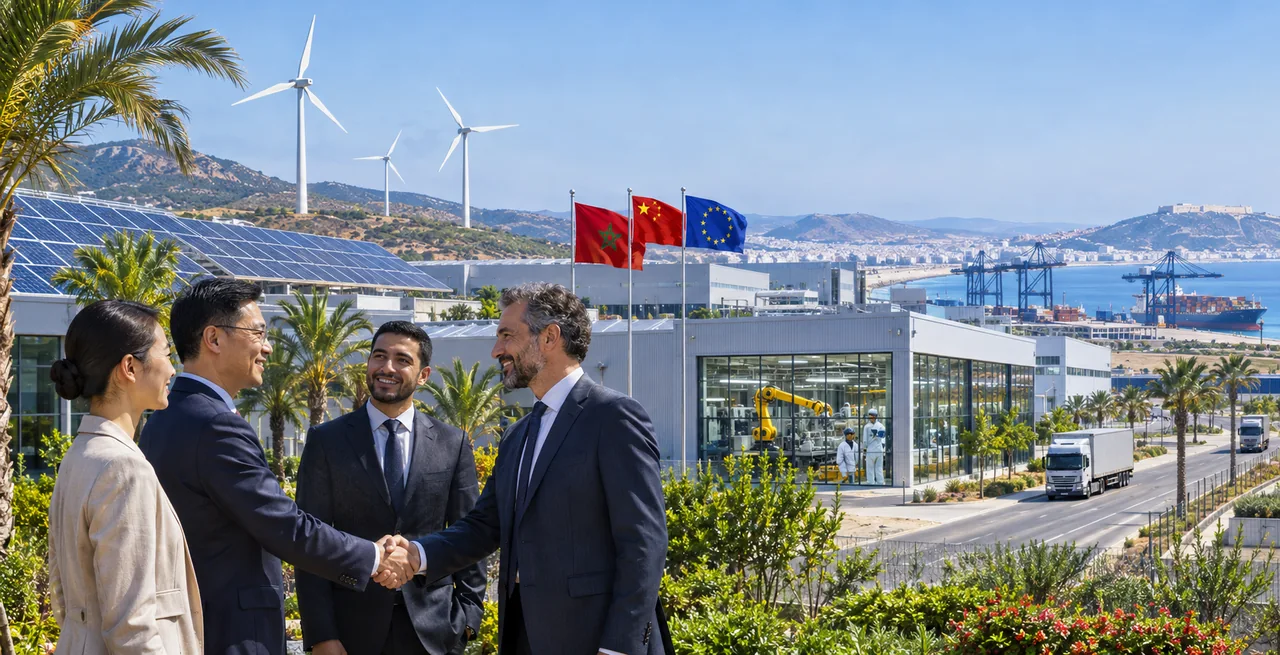
Morocco has established EU trade ties and an industrial base. For Chinese technology firms or European companies considering local manufacturing, the opportunity is genuine—but simply importing Chinese goods into Morocco does not create Moroccan origin or automatic duty-free access.

International industrial cooperation and export logistics

A documented commercial relationship

EU–Morocco goods trade reached €62.2 billion in 2025.

The EU remains Morocco's largest goods trading partner. The Association Agreement forms a preferential trade framework for goods that meet the applicable conditions. Product classification, documentary origin and EU regulatory compliance must still be established. [S01]

The important distinction: trade partnership ≠ blanket preference; manufacturing in Morocco ≠ automatic preferential Moroccan origin.
Check official evidence
01 / ORIGIN MATTERS

Two very different manufacturing models.

Only actual, product-specific production and documentary compliance establish a plausible export advantage.

MODEL A / NOT SUFFICIENT

Import finished goods, repackage, export.

Changing packaging, labels or shipping route generally does not itself qualify goods for preferential Moroccan origin. EU import duties and trade-defence measures must be checked for the actual product and origin. [S10][S15]

MODEL B / EVALUATE

Manufacture with measurable local processing.

Document the bill of materials, actual operations, value addition, supplier origin and required processing. Only then can a customs specialist evaluate whether the particular goods meet the applicable EU–Morocco rules.

Rules of origin: check the exact 2026 regime

The EU–Morocco Association Agreement includes preferential rules of origin. The Pan-Euro-Mediterranean framework is being updated. Importantly, the European Commission describes transitional rules that apply to Moroccan exports in 2026 while ratification of revised rules remains incomplete. The product's tariff code and relevant protocol must be checked for the actual date of shipment. [S10][S15]

A full bill of materials, the source of components, the production sequence and customs documentation are essential. Chinese inputs can be used, but their treatment and the required sufficient processing depend on the specific origin rule. Do not use country-of-shipment or assembly labels as substitutes for origin analysis.

CBAM: carbon data is part of the export model

The EU Carbon Border Adjustment Mechanism entered its definitive regime on 1 January 2026. It covers defined product categories including cement, iron and steel, aluminium, fertilisers, electricity and hydrogen. The EU importer generally carries the reporting and certificate obligations; foreign manufacturers may need to provide verified emissions information. [S09]

Under the updated rules, there is a 50-tonne annual importer threshold for many CBAM goods; electricity and hydrogen have different treatment. Eligibility and aggregation are rule-specific. This threshold is not a way to artificially split shipments or evade obligations. [S16]

For affected goods, calculate facility emissions, electricity sourcing, actual inputs and carbon documentation before quoting delivered prices to EU buyers. A low-carbon manufacturing process may be commercially valuable, but claims must be verifiable.

Product standards: access is not only a tariff question

Depending on the product, EU access may also require CE-marking/conformity assessment, machinery safety, electrical standards, chemicals compliance, packaging rules, extended producer responsibilities, battery obligations and technical documentation. Products with different intended uses can face very different requirements.

Begin with the specific technical product and EU buyer: define the applicable EU law, standards, testing body if needed, traceability, local and EU economic operators, warranty, product liability and after-sales obligations. Obtain specialist advice before committing to export.

Nearshoring has to work on a delivered basis

Morocco's geographic proximity to Europe is a strategic attraction, but a competitive proposal needs port-pair quotes, shipping frequency, inventory requirements, customs transit, insurance and delivery predictability. Compare the whole delivered unit economics against production in the EU and China.

Open the landed-cost comparator ↗

The seven questions an EU buyer will ask

StepEvidence to prepare
01 · ProductHS / CN classification, product specification and intended market.
02 · OriginBill of materials, supplier origin and qualifying production steps.
03 · SafetyApplicable EU standards, tests, declarations and technical file.
04 · CarbonCBAM scope, energy and embedded-emissions evidence as applicable.
05 · CustomsDuties, proof of origin, VAT, indirect representation and trade remedies.
06 · DeliveryRoute, quote, insurance, Incoterms, capacity and service level.
07 · BuyerForecast orders, acceptance criteria, warranty, payment and exit terms.
Agadir Green Industries can facilitate the early commercial dialogue, but customs origin, certification and legal eligibility require independent expert confirmation.
Discuss EU-oriented manufacturing ↗