
WORKFORCE × EXPORT
Sustainable Textiles & Consumer Manufacturing
From uniform production and agricultural screens to specialist cutting and repair: 25 testable industrial opportunities for Agadir, built around buyers, production discipline and material traceability.
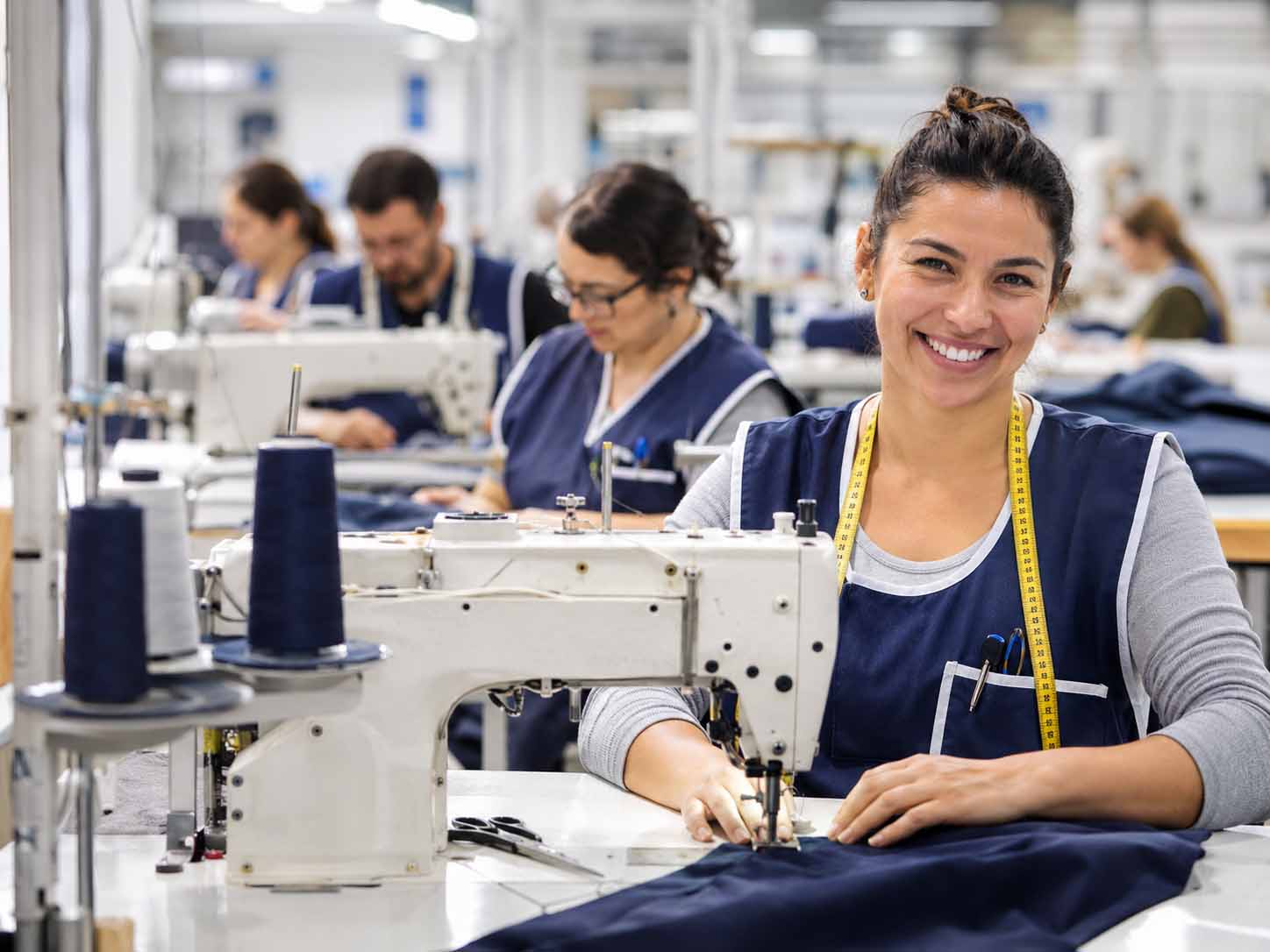
Where the commercial value could be created.
Morocco has established textile export links with European customers, but most supplier clusters are outside Souss-Massa. Agadir should therefore compete as a deliberate second-source or specialised production location, not assume it inherits existing northern orders. The IFC's 2026 work shows that documented textile-offcut recovery is feasible in Morocco, while European product and traceability rules are becoming more demanding. The stronger opportunities begin with contract sewing, technical roll-good conversion and business services that can operate without dyeing or spinning mills. Any wet finishing, advanced recycling or new footwear production requires separate proof of inputs, buyers, permits, skills and cost competitiveness.
Commercial focus: Start with contract-backed cutting, sewing, conversion, repair and quality services; build higher-capital circular or finishing operations only after supply and offtake trials.
Where the opportunity may come from
- Morocco already supplies European textile buyers; a specialised Agadir factory can pitch as an additional qualified sourcing location
- Drarga industrial-zone information and the regional investment centre explicitly include textile activities, subject to actual plot and licence availability
- Regional hotels, agriculture, food processing and industrial employers are potential buyers of specialised textile products and services
What investors must verify
- Established Moroccan textile clusters elsewhere have more mature supplier networks; Agadir must verify fabric and component logistics and trained labour capacity
- EU fibre labelling, chemical limits, preferential origin, PPE rules and future product-passport obligations depend on the exact product and commercial flow
- Water access, effluent treatment, social audits, quality controls and sufficient customer orders must be proven before high-capital textile processes are installed
25 focused subcategories
Five commercially connected themes. Each topic presents a business-specific opportunity, relevant buyer groups and the practical steps towards implementation.
Garment and apparel production
- Workwear and Uniform Manufacturing Build repeat-order uniform programmes for hotels, factories, logistics operators and institutional buyers.
- Technical Outdoor Apparel Assembly Sew weather-resistant jackets, trail garments and activity clothing for specification-led buyers.
- Hospitality and Hotel Linen Production Supply standardised sheets, pillowcases, covers and table linen to hospitality procurement programmes.
- Healthcare Textile Conversion Convert traceable fabrics into reusable hospital linen, patient wear and non-sterile clinical textiles.
- Private-Label Casualwear Manufacturing Operate disciplined short-run production of basic garments for European and Moroccan clothing brands.
Home and lifestyle products
- Contract Curtain and Upholstery Production Produce measured curtains, covers and upholstered textile components for project-based fit-outs.
- Mattress Covers and Bedding Component Production Make removable mattress covers, quilted panels and bed-base textile kits for established manufacturers.
- Reusable Retail and Delivery Bag Production Sew durable fabric bags and returnable delivery sleeves against measurable reuse specifications.
- Hotel and Home Textile Accessories Produce coordinated cushion covers, throws, laundry bags and removable interior textile pieces.
- Footwear Upper and Final Assembly Sew shoe uppers and assemble selected casual footwear models using tested materials and components.
Technical and agricultural textiles
- Greenhouse Textile Cutting and Finishing Convert approved greenhouse fabrics into measured crop-protection panels, liners and screens.
- Shade Netting and Agricultural Screen Assembly Manufacture correctly sized shade-net and insect-screen assemblies for farms and nurseries.
- Certified Industrial Protective Garment Assembly Manufacture task-specific protective garments only under validated material and conformity procedures.
- Geotextile Fabric Conversion and Seaming Cut and seam specified geotextile rolls for drainage, erosion-control and landscaping projects.
- Industrial Filtration Textile Assemblies Convert qualified filter media into reusable dust, water and process filtration components.
Circular textile services
- Industrial Fabric Offcut Recovery Collect and grade cutting-room scraps by fibre, colour and quality for documented reuse channels.
- Recycled Yarn Supply and Product Lines Convert verified recycled yarn into a limited range of textile products with traceable composition.
- Commercial Clothing Repair and Refurbishment Provide controlled repair and reconditioning for uniform fleets, workwear and returned garments.
- Low-Water Textile Finishing Services Evaluate controlled finishing processes that reduce water demand without bypassing wastewater treatment.
- Traceable Textile Sorting and Reuse Operate contracted sorting of suitable textile returns into resale, repair and material-recovery streams.
Manufacturing support
- Computer-Aided Pattern Cutting Services Sell digital nesting, grading and high-accuracy fabric cutting to multiple small sewing factories.
- Fast-Turnaround Textile Sample Studio Provide prototypes, fit samples and preproduction packages to brands before factory-scale orders.
- Textile Product Quality and Testing Laboratory Build an independent textile testing service focused on verification of buyer-critical product properties.
- Digital Textile Order and Production Tracking Implement order, cutting, sewing, quality and shipment records for small and mid-sized manufacturers.
- Custom Packaging and Labelling for Textile Exporters Convert and assemble garment packaging, barcode labels and shipment kits against retailer specifications.
Which of these 25 opportunities fits your capability?
Share your process, product, proposed capacity and target customer. We can then structure a first discussion around demand, utilities, workforce, investment requirements and market access.
Return to the complete investment case or review the evidence register.