
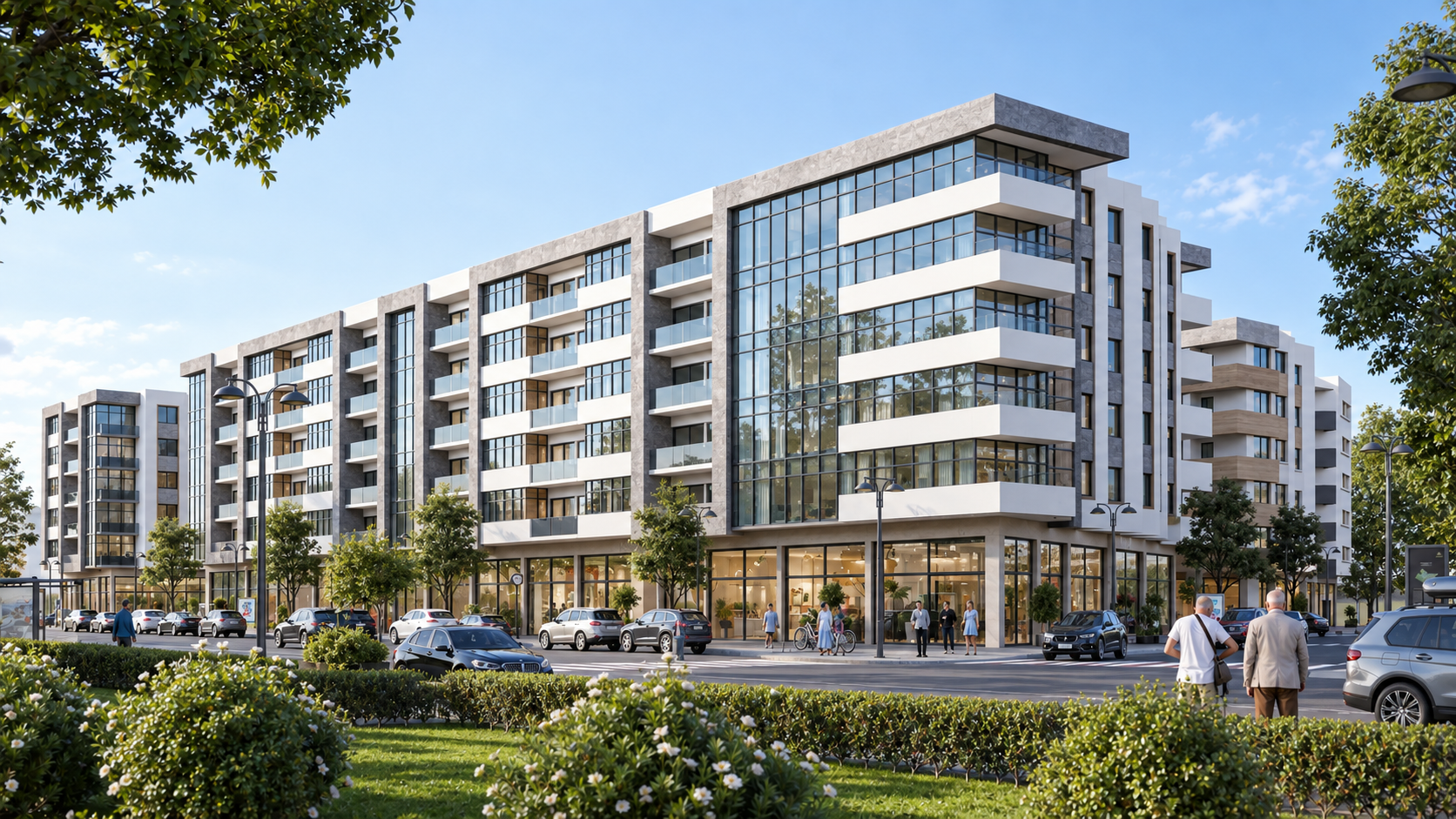
Can I reserve a new apartment in Agadir before construction starts?
Yes, and it is a common practice in the Agadir market. Developers launch projects before the first brick is laid, and buyers reserve units on the basis of plans, specifications and a show flat. The legal framework for this is the VEFA (vente en état futur d'achèvement), which governs off-plan sales in Morocco and sets out the rights and obligations of both parties. But the right to reserve does not mean that every reservation is safe. The protection depends on the documents that the developer provides and the diligence that the buyer performs.
This article explains how the reservation process works in Agadir, what the law requires, and what a buyer should verify before signing a reservation contract.
The reservation contract: the first step in the VEFA
In a VEFA purchase, the reservation contract (contrat de réservation) is the first document that the buyer signs. It is not the final sale contract, but it is a legally binding document that sets out the terms of the reservation and the obligations of both parties.
The reservation contract should identify the property, the price, the payment schedule, the delivery date, and the conditions under which the reservation can be cancelled. It should also state the developer's obligation to provide the bank guarantee and the building permit. In Morocco, the reservation contract is regulated by Law 44-00, which sets out the mandatory content and the protections for the buyer .
The practical implication is that the reservation contract is not a formality. It is the document that establishes the buyer's position, and it should be reviewed carefully before signing.
The legal protections for the buyer
The VEFA framework provides several protections that apply from the reservation stage onwards.
The building permit must be in place. The developer cannot legally reserve units before obtaining the building permit. A reservation contract signed before the permit is issued is void, and the buyer is entitled to the return of any payment .
The payment at reservation is capped. The law limits the amount that the developer can require at the reservation stage. The payment is typically a small percentage of the price, and it should be held in a secure manner. The full payment schedule is tied to construction milestones, not to arbitrary dates .
The completion guarantee. The developer must provide a bank guarantee or an equivalent security that protects the buyer's advances if the construction is not completed. The guarantee should be in place before the buyer makes any significant payment .
The notarial deed. The final sale must be completed before a notary, and the reservation contract should state that the notarial deed will follow. The notary verifies the title and the developer's authority, and ensures that the registration is completed .
The practical implication is that the buyer should not accept a reservation that ignores these protections. A developer who asks for a large payment before the permit is issued, or who cannot provide the completion guarantee, is a developer who is not operating within the framework.
The documents to request before signing
Before signing the reservation contract, the buyer should request the following documents.
The building permit. The permit should be valid and should cover the specific project. The buyer should verify the permit number and the date, and confirm that the project matches the approved plans.
The land title. The developer should own the land, or have the right to build on it. The land title (titre foncier) should be registered and free of charges that would prevent the construction.
The completion guarantee. The bank guarantee or equivalent security should be in place, and the buyer should receive a copy. The guarantee should cover the payments that the buyer will make.
The specification. The reservation contract should include a specification that defines the area, the layout, the materials, the equipment, the parking, and the common facilities. The specification should be precise enough to be enforceable.
The payment schedule. The schedule should be tied to the construction milestones, and the buyer should understand what evidence supports each payment. The schedule should not front-load the payments or require large sums before the construction has progressed.
The practical implication is that the documents are the buyer's protection. A developer who cannot provide them, or who provides documents that are incomplete or inconsistent, is a developer who should not be trusted with the reservation payment.
The Agadir context
Agadir has an active off-plan market, with several developers launching projects in different districts. The Al Omrane Souss-Massa open days in 2026, for example, offered apartments in several projects, including Al Manar in Founty and Morjana in Taddart Anza, with payment facilities and a first payment of 15% to 25% depending on the project . Private developers are also launching projects in La Pergola, Hay Mohammadi and other districts.
For a buyer, the practical implication is that the reservation process is well established in Agadir, but the quality of the developers and the projects varies. The VEFA framework applies to all of them, but the buyer should verify that the specific developer is complying with it. A developer who is not willing to provide the bank guarantee, or who proposes a payment schedule that does not match the law, is a developer who is not operating within the framework.
What to do if something goes wrong
If the developer fails to deliver the property, or if the construction is delayed, the buyer has remedies under the VEFA framework. The completion guarantee is the first line of protection, and it should cover the buyer's advances. The buyer can also pursue the developer through the courts, but the legal process can be slow and expensive.
The practical implication is that prevention is better than remedy. The buyer who verifies the developer, the documents and the guarantees before signing is protected. The buyer who skips the verification is relying on the developer's goodwill, which is not a strategy.
So can you reserve before construction?
Yes. The VEFA framework permits it, the Agadir market offers it, and the reservation contract is a recognised legal document. But the reservation is only as safe as the protections that accompany it: the building permit, the completion guarantee, the notarial deed, and the specification.
The buyers who do well are the ones who request the documents, verify the developer, and insist on the legal protections before signing. The ones who struggle are the ones who are persuaded by the show flat and the promise of a discount, and sign without checking whether the permit is in place, the guarantee exists, or the specification is enforceable.
Investment opportunities with Agadir Investment
Agadir Investment works with international buyers seeking exposure to the Agadir property market and the wider Souss region. There are two principal routes.
1. Property investment
Investors can purchase property in Agadir across a range of types: apartments, new-build residences, villas, holiday homes, buy-to-let properties and long-term holdings. Agadir Investment also provides property management services, so owners who do not live in Morocco can have their property managed on their behalf — covering day-to-day operations, guest or tenant handling, and maintenance coordination — without needing to be present.
2. Investment in property development
For larger investors, there is the option to invest directly in the financing and development of property projects. For investments from €5,000,000, Agadir Investment states a fixed, guaranteed return of 7% per year. This is not an estimated or variable return but the stated fixed rate, subject to the applicable contractual terms. Investors considering this route should review those terms carefully with their own advisers before committing.
Contact
To discuss either route, or to request current availability and documentation, contact Agadir Investment at agadirinvestment.com or by email at info@agadirinvestment.com.