
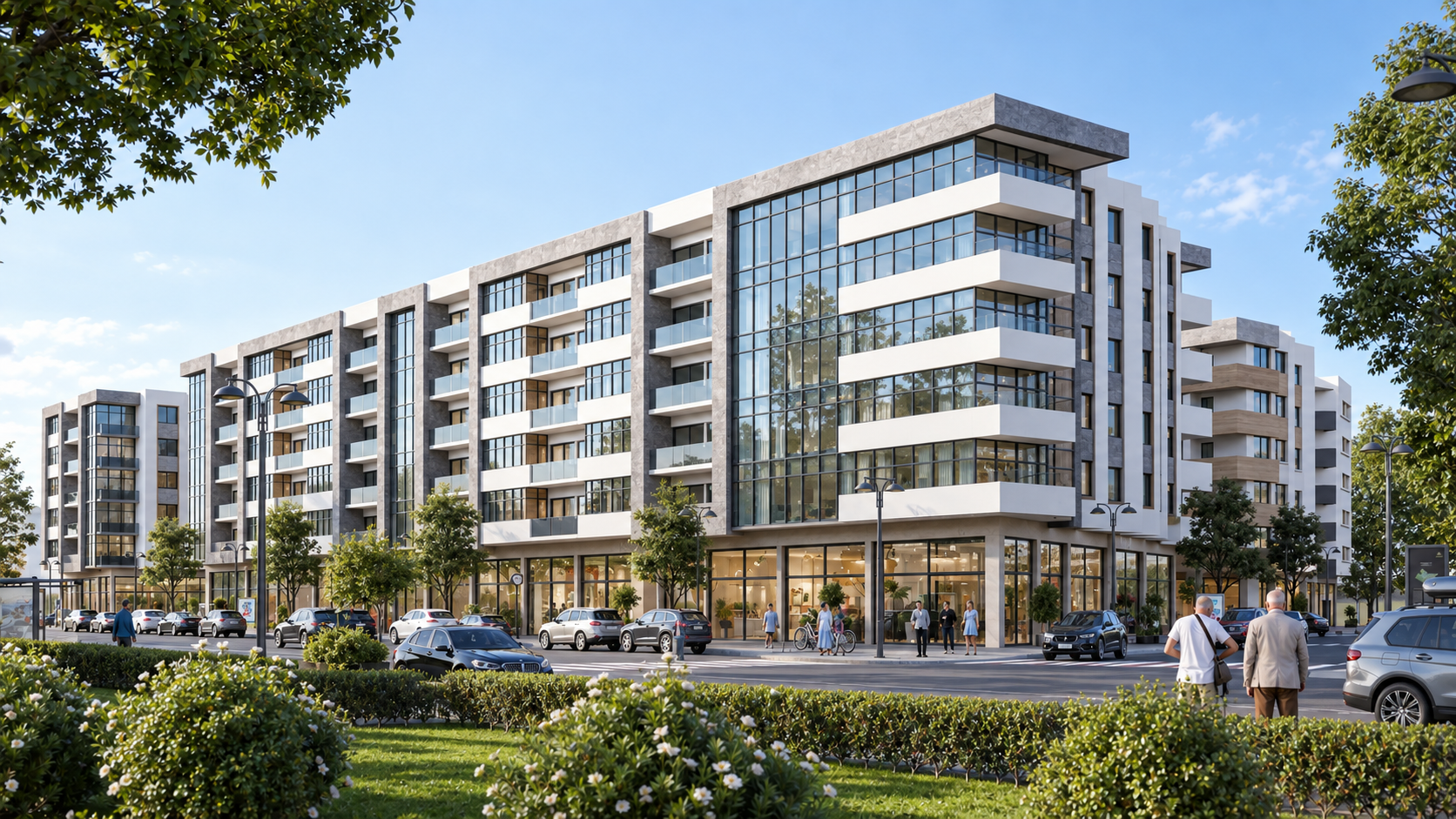
Should I buy directly from a developer in Agadir?
Buying directly from the developer is a common option when looking at new apartments in Agadir. The buyer may visit a project sales office, choose a floor plan and discuss a staged payment schedule without a separate selling agent. Direct contact can make it easier to ask technical questions and follow construction progress. It does not, however, eliminate the need to check the developer, title, approvals or purchase contract independently.
Whether buying directly is the best approach depends on the particular project, the developer's record, the contract terms and the buyer's experience. A reputable intermediary may add useful knowledge, while an inexperienced intermediary may add little. The useful question is not simply who introduces the apartment but who is responsible for each promise and how the buyer's money and rights are protected.
What a direct purchase can simplify
The advantage most buyers notice is a shorter communication chain. It may be easier to obtain drawings, clarification of materials, a list of remaining units or progress information from the company constructing the building. A buyer can ask the same party about layout changes, completion arrangements, payment milestones and after-sales repairs. If the sales representative provides useful answers, have the material points confirmed in writing and attached to the agreed documents where appropriate.
A direct relationship can also reveal how the developer deals with reasonable questions. Does the company provide consistent plans and specifications? Can it explain the project structure and who holds the land? Are construction milestones verifiable? Is there a clear person responsible for customer communication after signing? These are meaningful signs of professionalism. A polished showroom or rapid response on messaging applications is not the same as a sound legal and financial structure.
Do not assume a direct purchase automatically saves an agency fee or produces a lower purchase price. Compare the total cost in writing with comparable finished units and with alternatives available through agents. Some developments use fixed public prices regardless of the purchase channel.
Verify who actually owns and develops the property
The brand advertised on a building may not be the legal company that owns the plot, signs the contract or receives instalments. Ask for the exact name and registration details of the contracting entity. Confirm through the appropriate professionals who holds the land rights, who has authority to sell and whether there are registered charges or restrictions relevant to the project. The goal is to understand precisely which legal entity owes the buyer a finished apartment and which entity receives the funds.
A development group may operate several project-specific companies. That structure is not automatically a problem, but it means the reputation of a larger group should not be mistaken for an unconditional guarantee of every project company's obligations. Examine the relevant company and the contract itself. An independent lawyer or notary can help assess title records, authorisations and any security arrangements.
Before paying a reservation deposit, confirm what documents the buyer will receive, where the deposit is held, when it becomes non-refundable and what happens if the transaction cannot proceed for reasons outside the buyer's control.
Look at finished buildings, not just computer images
Completed projects are one of the most useful forms of evidence. If the developer has delivered comparable buildings, inspect the condition of the common areas and ask owners or managers about lifts, waterproofing, utility connections, after-sales service and adherence to the promised timetable. A building that still looks well maintained after several years may say more about construction quality than a new presentation suite.
Ask for the specification in sufficient detail to compare offers. Marketing descriptions such as 'luxury finish' or 'premium bathroom' tell a buyer very little. More useful information identifies the materials, window type, kitchen and bathroom equipment, ventilation, parking rights, access arrangements and the condition in which common facilities will be handed over. For an investor planning holiday rentals, also ask whether the building's rules permit the intended letting arrangement.
New construction can be attractive, but a lower purchase price during building work should be evaluated against the risk that completion, financing or handover may take longer than planned.
Understand the off-plan contract
For an apartment bought before completion, the purchase documents should describe the unit, price, payment schedule, agreed specifications, expected completion process and consequences of delay. Moroccan off-plan transactions can involve a legal framework known as VEFA, but the rights and obligations depend on the actual transaction and applicable rules. Do not assume that a salesperson's informal timeline overrides the signed documents.
Look for precise identification of the unit and, where relevant, ancillary rights such as parking or storage. Confirm how any permitted substitution of materials is documented, what happens if the measured area differs from the plan and whether the buyer may have an independent professional inspect the completed apartment. Ask how defects identified at handover are recorded and corrected. If a promised communal amenity is central to the investment case, ensure the commitment is documented rather than left in promotional material.
Have the agreement reviewed by a professional acting in the buyer's interest. The developer's representatives can explain their standard contract, but they are not independent advisers to the purchaser.
Where the money goes matters
The most important moment in many property transactions is the movement of funds. Ask for a written schedule showing each instalment, its legal basis, recipient account and relationship to construction progress or contractual milestones. Do not transfer money merely because a representative says a payment is urgent. Confirm banking details through an independent channel before each material transfer, particularly if the instructions have changed.
A foreign investor also needs a clear record of how funds entered Morocco. Bank transfer documentation, invoices and notarial records can matter for later sale and the movement of proceeds abroad. The exact arrangements depend on personal circumstances and banking rules, so buyers should discuss them with their bank and notary before committing. The existence of a project brochure is not evidence that a particular payment account offers protection.
If a project is delayed or stopped, the recovery position may depend on the contractual and legal structure. It is better to understand that position before signing than to learn about it after instalments have already been paid.
Compare the total value with other options in Agadir
A direct development purchase should be tested against completed apartments and competing projects. Compare price per usable square metre, location, access to services, parking, building management, operating charges, noise exposure and resale appeal. Do not compare two square-metre prices until you know whether balconies, terraces and common areas are included in the same way.
The strategy matters. An owner planning long-term letting may prioritise access to workplaces, schools and transport over shared holiday amenities. A buyer targeting visitors may place greater weight on walkability, furnishings and the operational rules of the building. Where the developer offers rental projections, check the assumptions and include management, empty periods, platform charges, taxes and maintenance before estimating net income.
A buyer who is also considering using the apartment personally should include practical comforts such as storage, orientation, accessibility and nearby services. A property is not a good investment merely because it is new or purchased without an agent.
Questions to put directly to the developer
Ask what is finished and what still depends on approvals, financing or contractor schedules. Request the date and conditions of handover in writing. Identify who will administer the building after completion, how service charges are estimated and whether the developer controls the initial property management company. Ask whether the purchase price includes the exact kitchen and bathroom specification shown and what additional charges may apply at closing.
If the answers change, ask the representative to reconcile them with the documents. Keep emails, plans and agreed revisions in a single project file. For the final inspection, a written list of defects and completion items is more useful than a conversation in the corridor. Make sure the eventual handover includes keys, meters, available guarantees and building contact details.
The willingness to answer these questions clearly is useful information. A company that will not provide basic documents before receiving a deposit is asking the purchaser to accept unnecessary uncertainty.
Consider the resale and long-term management
A developer's task is to sell and construct units. The buyer's investment continues long after handover. Ask whether the apartment will appeal to residents or tenants once the building is no longer new. Consider the number of nearly identical units, potential competition from later phases and the quality of ongoing condominium management. A high number of investor-owned apartments can affect rental competition even where initial sales have been successful.
An overseas buyer should arrange a handover and ongoing management plan before the first guest or tenant arrives. That may mean inventory photographs, utility accounts, preventative maintenance, tenant screening and a monthly owner statement. If the developer proposes a rental management service, evaluate it separately from the purchase agreement and compare it with independent local providers.
Clear records of construction quality and maintenance also support resale. An investor who can demonstrate clean ownership documents, a well-managed building and reliable rental accounts is in a stronger position than one relying only on the original promotional brochure.
Direct or through an agent?
A capable local agent may help compare multiple developers, translate practical differences between districts and negotiate details. Direct dealing may be appropriate for a buyer who understands the local market and has independent advisers. Neither route is inherently safer. The protection comes from knowing the counterparty, verifying the property and receiving professional advice that is independent of the seller's commercial interest.
If an agent is involved, find out whom the agent represents and how the commission is calculated. If there is no agent, do not skip the same questions merely because there is one fewer person at the table. Document everything important, evaluate the completed product you are being promised and keep enough financial flexibility for delays and unexpected costs.
For investors considering new construction in Agadir, direct developer contact can be convenient and informative. It should be one part of a careful purchase process, not a substitute for it.
Investment opportunities with Agadir Investment
Agadir Investment works with international buyers seeking exposure to the Agadir property market and the wider Souss region. There are two principal routes.
1. Property investment
Investors can purchase property in Agadir across a range of types: apartments, new-build residences, villas, holiday homes, buy-to-let properties and long-term holdings. Agadir Investment also provides property management services, so owners who do not live in Morocco can have their property managed on their behalf — covering day-to-day operations, guest or tenant handling, and maintenance coordination — without needing to be present.
2. Investment in property development
For larger investors, there is the option to invest directly in the financing and development of property projects. For investments from €5,000,000, Agadir Investment states a fixed, guaranteed return of 7% per year. This is not an estimated or variable return but the stated fixed rate, subject to the applicable contractual terms. Investors considering this route should review those terms carefully with their own advisers before committing.
Contact
To discuss either route, or to request current availability and documentation, contact Agadir Investment at agadirinvestment.com or by email at info@agadirinvestment.com.