
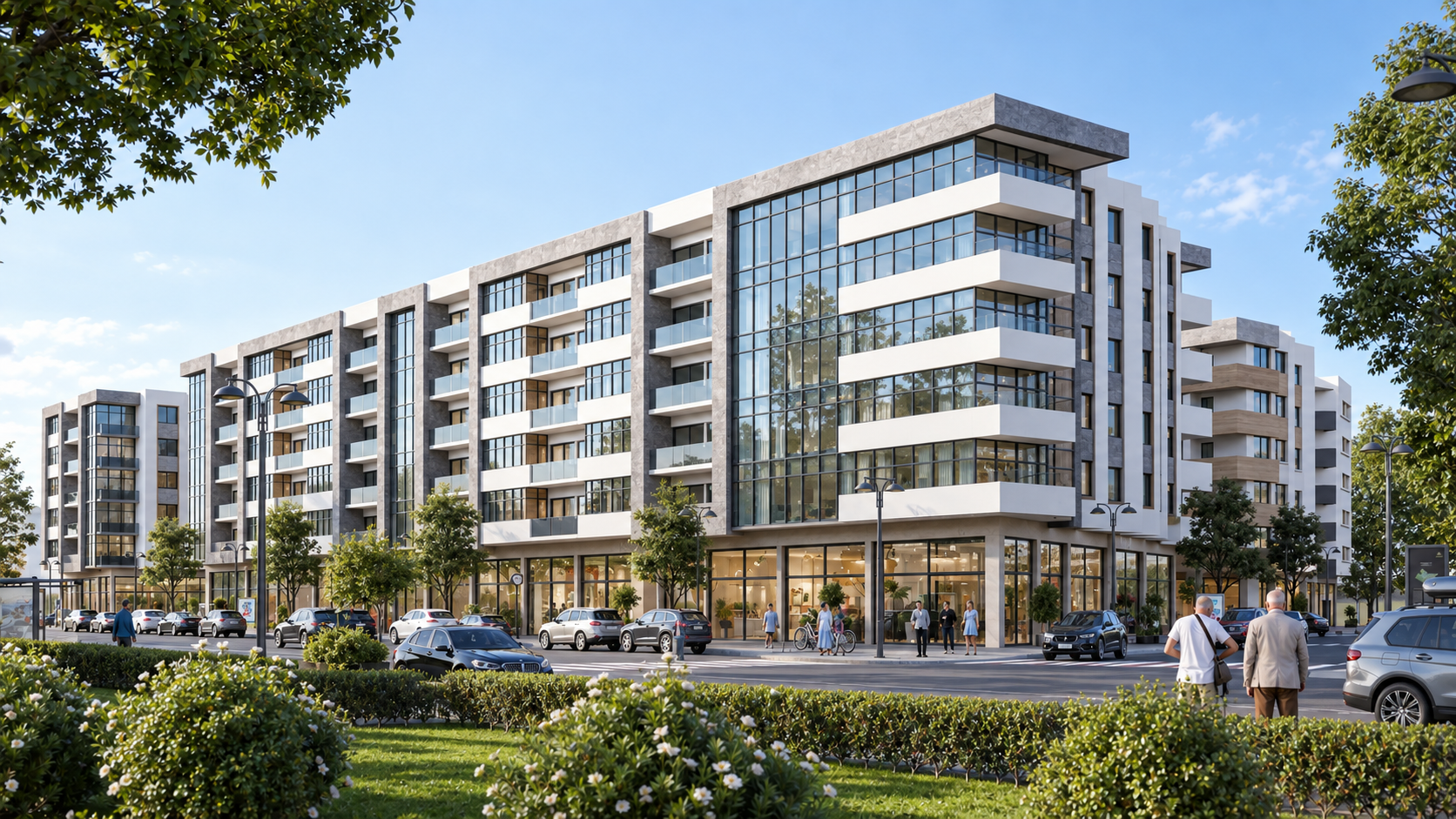
Can I customise a new-build apartment in Agadir?
The short answer is that it depends on the developer and on the stage of the construction. Some developers offer a menu of finishes and layouts that the buyer can choose from, particularly if the reservation is made early. Others deliver a standard product with no room for variation. The law does not give the buyer an automatic right to customise, but it does require the developer to respect the specification and the plans that were contractually agreed. The practical question is not whether customisation is possible in principle, but whether the specific developer is willing to offer it, and at what cost.
This article explains what customisation means in the Moroccan off-plan context, what the law requires, and how to approach the negotiation with a developer in Agadir.
The legal framework: the specification is the reference
The VEFA framework (Law 44-00) requires the developer to provide a specification (cahier des charges) that is consistent with the approved architectural plans. The specification must describe the components of the project, the type of services and equipment, the completion deadline, and the delivery terms. Both parties sign it, and a copy is given to the buyer .
The plans annexed to the contract must carry the mention "ne varietur" (not to be changed), and the developer is bound to respect them . The Moroccan Court of Cassation has confirmed that any modification of the plans or the specification that is contested by the buyer requires the judge to examine its legality under the legal provisions .
The practical implication is that the specification is the document that defines what the buyer will receive. A developer who offers customisation is offering a variation from the standard specification. The variation should be documented in writing, signed by both parties, and annexed to the contract. A verbal agreement to change the tiles or the kitchen is not enforceable.
What developers actually offer in practice
Customisation is not a standard feature of the Agadir off-plan market. It is more common in premium developments, where the developer has the margin to absorb the complexity, and less common in the state-supported or mid-market programmes, where the construction is standardised to keep the costs down.
Jibril Immo, an Agadir agency, notes that some developers offer the possibility of choosing the finishes, the materials, or the interior layout . But the same source warns that the delivered property may not correspond to the initial promises, and that the specification must be checked carefully to avoid the traps .
An English-language listing for an off-plan apartment in Agadir illustrates the practice: the seller states that "you will be able to decide on the internal fit out if you contact me before they are built" . That is a conditional offer, dependent on the timing and the developer's willingness. It is not a legal right.
The practical implication is that the buyer should ask the developer directly what customisation is available, and should get the answer in writing. A developer who says "we can discuss it later" is a developer who is not committing to anything.
The timing: earlier is cheaper and easier
The cost and the feasibility of customisation depend heavily on the timing. The earlier the request is made, the more options are available and the lower the cost. Once the construction has progressed, the design, the procurement, and the construction are locked in, and changes become more expensive and more disruptive.
The Royal Palm Marrakech buyer's guide, which describes a premium development with extensive design options, states the principle clearly: it is preferable and less costly to choose all the options before signing the preliminary contract. Customisation after the contract is at the developer's discretion, and it is likely to become more expensive as design, procurement, and construction progress .
The practical implication is that the buyer who wants to customise should raise the request at the reservation stage, before the preliminary contract is signed. A request made after the structural works have started is a request that the developer may refuse, or accept only at a significant premium.
What can be customised, and what cannot
The scope of customisation depends on the developer, but there are limits that apply to every project.
The layout. Non-structural changes, such as the position of a non-load-bearing partition, are sometimes possible. Structural changes, such as moving a load-bearing wall or adding a floor, are generally not, because they affect the building's stability and the approved plans.
The finishes. The choice of tiles, paint, kitchen units, sanitary ware, and internal doors is the most common form of customisation. The developer may offer a standard range, an upgrade range, or a credit against the standard specification if the buyer wants to source the materials independently.
The equipment. Air conditioning, kitchen appliances, and built-in storage may be offered as options. The buyer should confirm whether the price includes the equipment or whether it is an extra.
The common areas. The buyer cannot customise the common areas, because they are shared with the other co-owners. The specification for the common areas is fixed by the developer and the building's co-ownership rules.
The practical implication is that the buyer should ask for a written list of the options, with the prices and the deadlines. A developer who cannot provide a list is a developer who is not organised for customisation, and the buyer should not assume that the request will be honoured.
The risks of customisation
Customisation carries risks that the buyer should weigh against the benefit.
The cost. The upgrade finishes and the additional equipment are usually charged at a premium. The buyer should compare the cost of the customisation with the cost of doing the work after the handover. In some cases, it is cheaper to accept the standard specification and renovate later, particularly if the buyer has access to their own contractors.
The delay. Customisation can extend the construction timeline, because the developer has to order the materials and coordinate the work. The buyer should confirm whether the customisation affects the delivery date, and whether the delay is reflected in the contract.
The documentation. A customisation that is not documented in the contract is a customisation that the developer can deny. The buyer should ensure that the choices are written into the specification, signed by both parties, and annexed to the contract.
The conformity at handover. The buyer should check at the handover that the customisation has actually been delivered. A developer who has substituted a cheaper material, or who has not installed the requested equipment, is in breach of the specification. The handover inspection is the moment to identify the discrepancy and list it as a reserve.
The Agadir context
Agadir has an active off-plan market, with a range of developments from the state-supported Al Omrane programmes to private premium residences. The level of customisation varies accordingly. The Al Omrane projects are standardised, with a fixed specification and limited options. The private premium developments are more likely to offer a choice of finishes and equipment.
For a buyer, the practical implication is that the customisation should be part of the comparison between two developments. A project that offers the finishes the buyer wants, at a price that is competitive, may be a better choice than a cheaper project that requires a full renovation after the handover. The total cost, including the customisation, is the figure that matters.
So can you customise?
Yes, in some developments and at some stages. The law does not give the buyer an automatic right, but the specification is the document that defines what is delivered, and a variation can be agreed in writing if the developer is willing. The earlier the request, the more likely it is to be accepted and the lower the cost.
The buyers who do well are the ones who ask for the options in writing, compare the cost with the alternative of renovating later, and ensure that the choices are documented in the contract. The ones who struggle are the ones who accept a verbal promise, discover that the developer has installed the standard specification, and have no remedy because nothing was written down.
Investment opportunities with Agadir Investment
Agadir Investment works with international buyers seeking exposure to the Agadir property market and the wider Souss region. There are two principal routes.
1. Property investment
Investors can purchase property in Agadir across a range of types: apartments, new-build residences, villas, holiday homes, buy-to-let properties and long-term holdings. Agadir Investment also provides property management services, so owners who do not live in Morocco can have their property managed on their behalf — covering day-to-day operations, guest or tenant handling, and maintenance coordination — without needing to be present.
2. Investment in property development
For larger investors, there is the option to invest directly in the financing and development of property projects. For investments from €5,000,000, Agadir Investment states a fixed, guaranteed return of 7% per year. This is not an estimated or variable return but the stated fixed rate, subject to the applicable contractual terms. Investors considering this route should review those terms carefully with their own advisers before committing.
Contact
To discuss either route, or to request current availability and documentation, contact Agadir Investment at agadirinvestment.com or by email at info@agadirinvestment.com.